GSA
Rebuilding a 32-page WordPress site in pure code, without moving a pixel

GSA is a building-services and locksmith company in Düsseldorf, running since 1982 and serving half a dozen cities around it. Their 32-page website ran on WordPress with a heavy page builder on top, and it had grown slow enough to feel it. The brief was unusual, and strict: change everything underneath, and change nothing on screen.
Same pages. Same pixels. A third of the wait.
There is no WordPress left. No database, no page builder, no plugins, no code assembling each page on request. Just finished HTML files, served from the very same hosting they were already paying for.
Each measure has its own scale. Google Lighthouse, median of five runs, measured against the live site on 14 August 2026.
Results
Every number here was measured, on a stated date.
Three Times Faster
Google's performance score went from 55 to 97 on mobile and 76 to 100 on desktop. The slowest page in the site dropped from 10.6 to 3.1 seconds.
Identical, and Proven Identical
All 32 pages were photographed against the old site at nine screen sizes and compared pixel by pixel. Median difference: 0.6%. It found four real mismatches, and all four were fixed before launch.
Nothing Left to Break
No database, no admin panel, no plugins to patch. A website that is files instead of software. The site went from 2.1 GB across 12,641 files to 28 MB across 423, small enough to back up completely in two seconds.
Things Found on the Way
Four pages nobody could reach through the site, and 24 places across six pages naming the wrong city. The Neuss page invited you to call Düsseldorf. Fixed, along with the accessibility score (80 to 95) and SEO (92 to 100).
They edit the site by asking Claude
Take away the CMS and the obvious question is how anyone edits the site afterwards. So I connected it straight to Claude through MCP, the open standard for letting an AI assistant work with a system directly. There is no dashboard to log into and no licence to renew: someone at GSA opens the Claude app they already pay about €20 a month for, says what they want changed, and the website changes.
That covers far more than swapping a photo or correcting a phone number. It can build a complete new page from nothing. And have it come out matching the structure, tone and branding of the pages already there, because the assistant was taught this site's own patterns rather than handed a generic template.
The care went into the guardrails. Every change writes an automatic restore point, and they can drop their own before anything big. Access is two-step, with credentials and permissions scoped to exactly what the work needs and nothing more. Design changes are fenced into a range that can't break the layout. It can rewrite the site; it can't wreck it.


Where to go next
See all cases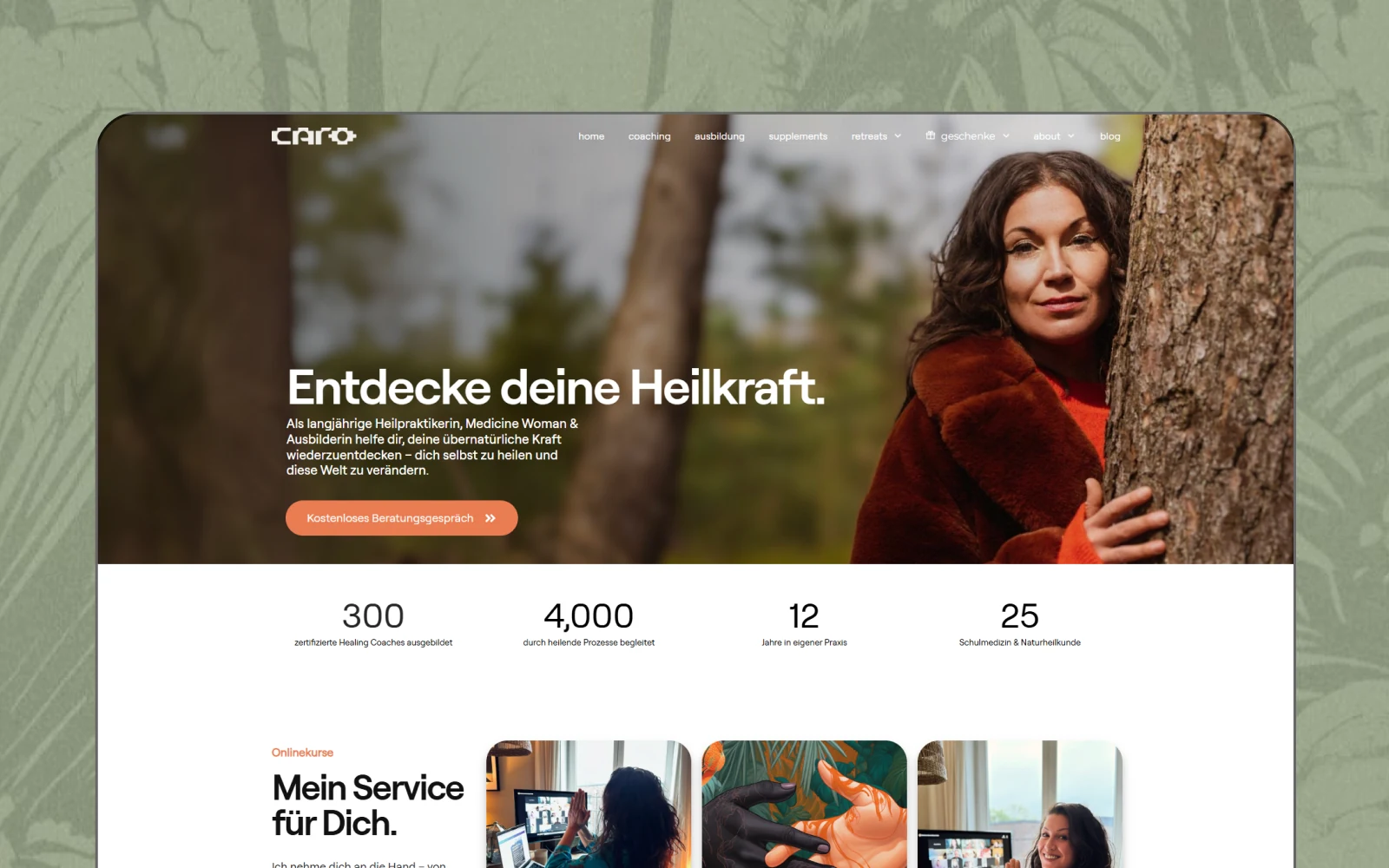
Carolin Tietz
The lighter version of this job. Same rule: nothing may look different. But the fix was cleaning what was already there instead of replacing it.
Read the Carolin Tietz case
Taura
The other end of the studio: no existing site at all. A brand, a product page and an investor funnel built from a blank page.
Read the Taura case