Mate en Mano
Scaling an e-commerce engine for the European market

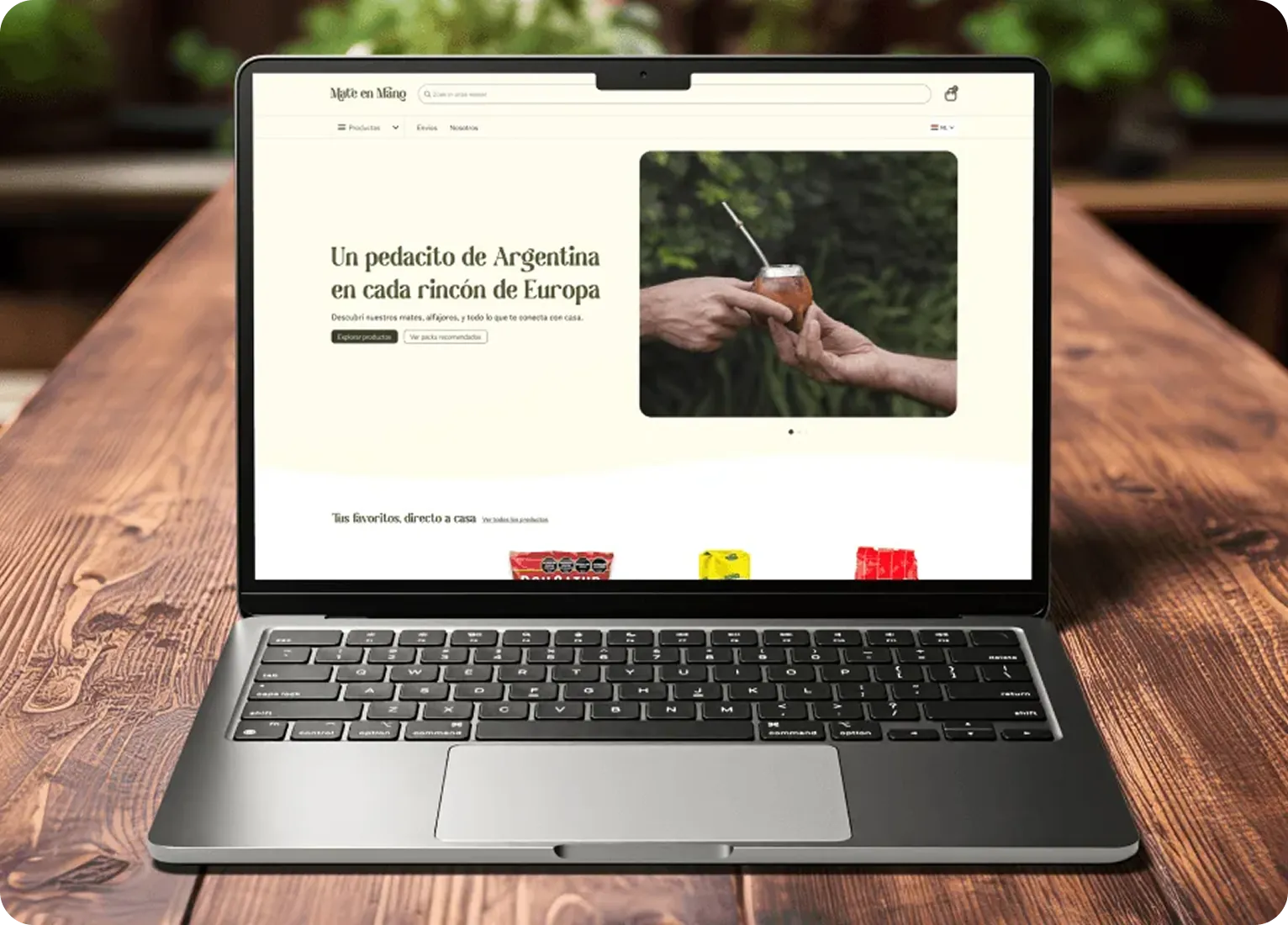
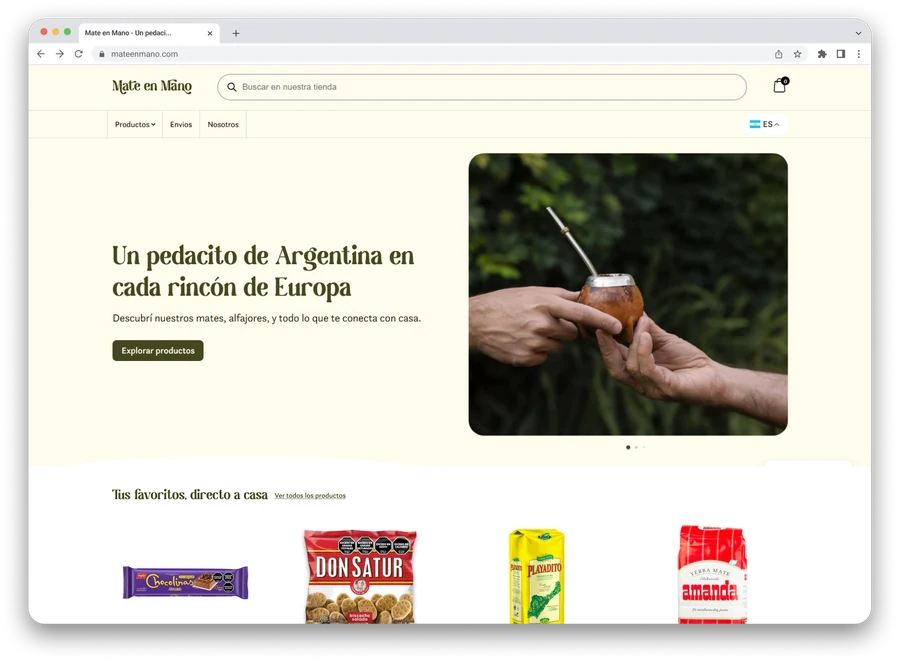
A rebuild for a small Amsterdam e-commerce brand: custom code instead of plugins, a buying flow written for each market, and a store that could sell across European borders without tripping over itself.
The numbers
Before breaking down the technical execution, here are the core metrics that validate our product strategy:
93% Customer Satisfaction (NPS)
Helped by a clearer interface and copy written for each market.
Beyond the Netherlands
Expanded from the Netherlands into other EU markets, with the store in three languages and local currencies.
Faster Pages, Cleaner SEO
Custom code instead of heavy third-party plugins, which cut load times and cleaned up the technical SEO.
Fewer Carts Abandoned
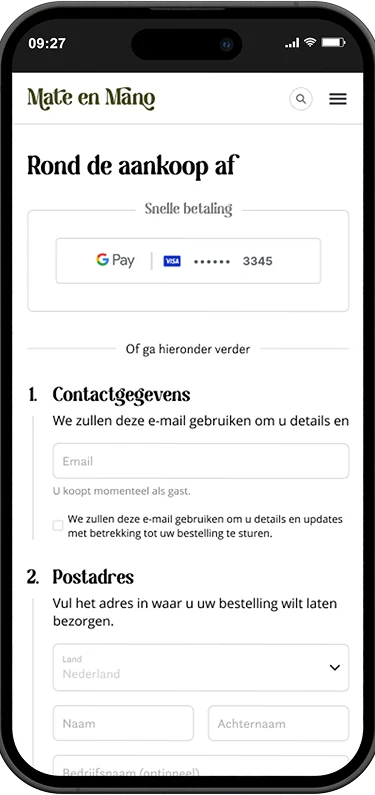
Simplified the checkout around the regional European payment methods shoppers there expect.


The story behind it
The founder of Mate en Mano came to me with a high-potential product and a clear goal: capture the European market. However, the existing platform lacked the technical foundation and localised trust required to scale internationally.
As the sole Product Designer and Engineer on the project, I guided the product through every phase of the lifecycle, from initial discovery and empathy mapping to custom PHP/JavaScript implementation. I did not just build an online shop. I engineered a high-performance digital asset designed to turn curious European buyers into repeat customers.

Context, competition and localisation
Selling a niche, culturally rich product to a European demographic requires more than translating text. It demands building immediate trust with a sceptical audience. Standard off-the-shelf e-commerce templates would have bloated the site, slowed down load times, and felt generic. To stand out, my strategy focused on three pillars:
Custom Code Performance
I bypassed heavy page builders and third-party plugins, writing tailored PHP and JavaScript to keep server response times low.
Localised Storytelling
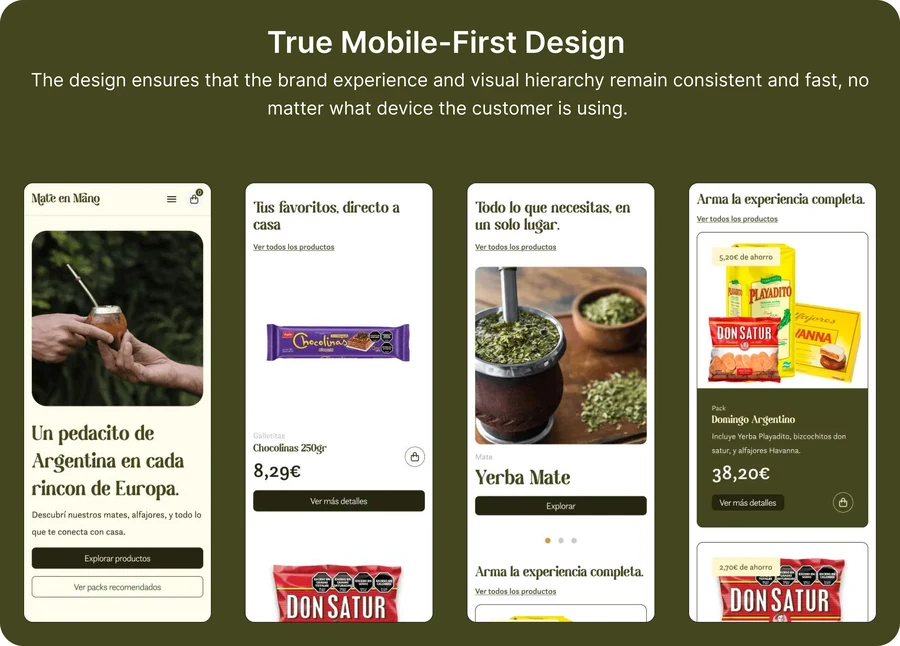
Built the store in Dutch, German and Spanish, and added "Discovery Packs" so new buyers in each market knew what they were getting.
Regional Payment Friction
Re-architected the payment flow to support localised European payment methods (such as iDEAL and Klarna), which had been the biggest source of drop-offs at checkout.

Structural challenges and execution
1. Performance-first WordPress engineering
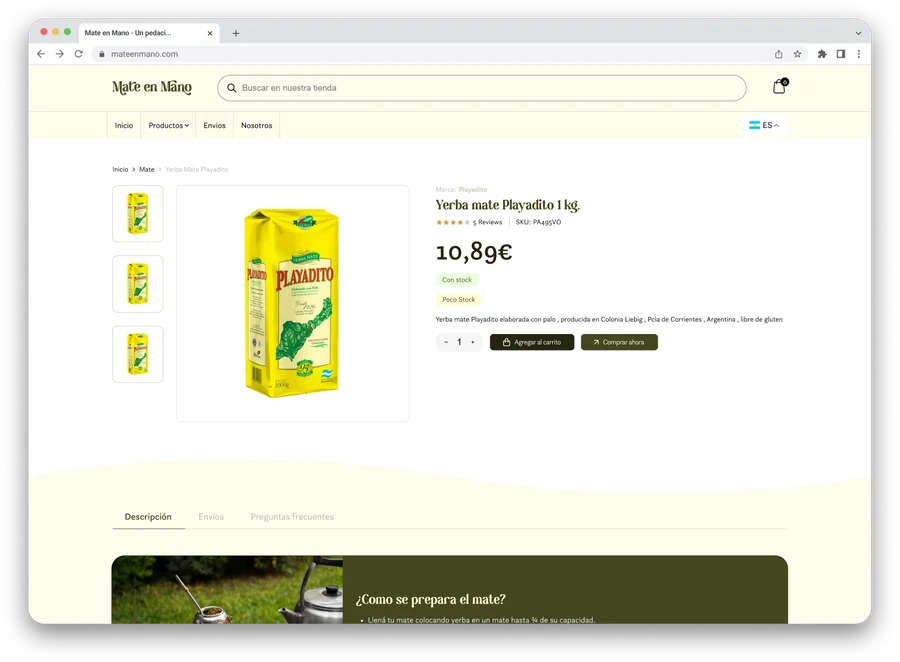
I built a custom WordPress/WooCommerce theme from scratch, so the client would own it outright and nothing would need patching every month. Custom AJAX filtering and instant search let people browse the catalogue without a full page reload between clicks.
2. Frictionless path to purchase
I redesigned the whole path from product discovery to post-purchase confirmation:
- A sticky slide-out cart keeps people in the buying flow instead of sending them to a separate page, and suggests related products while they are there.
- The checkout follows the patterns people already know from Shopify, and shows shipping costs up front rather than at the last step.
- Over 70% of their traffic is on a phone, so the responsive framework was kept light enough to load quickly there.
3. Rigorous testing and validation
I did not launch on assumptions. Before going live, I ran a controlled "Friends & Family" testing phase, gathering qualitative feedback through heatmaps and user recordings to refine micro-interactions and resolve edge cases before scaling ad spend.
Tools and methods
Strategy & Discovery
Miro, Notion, SurveyMonkey, Hotjar, Looker Studio.
UI/UX & Prototyping
Figma (Design System & Responsive Frameworks).
Engineering & Stack
Custom WordPress, WooCommerce, PHP, JavaScript/AJAX, FileZilla.